Hello and welcome to my portfolio!
As a senior software engineer, I’ve spent 8+ years building and hardening production systems across PC, mobile, and research contexts – Unity/C# is my deepest specialization, but the thread that keeps re-emerging across nearly everything I do is systems architecture, third-party integration, and translating technical risk for non-technical stakeholders: founders, researchers, and domain experts who depend on the software working correctly. This has included auditing and rebuilding native SDK integrations after undocumented breaking changes, designing event-driven architectures that keep dozens of interdependent systems in sync, building data-validation pipelines that catch bad data before it reaches an end user, and running a Git review process that verifies every external contribution before it reaches the main branch. I also founded and run an independent studio, TryHard, LLC, which has given me experience owning engagements end-to-end. Below are highlights of my key projects, showcasing my skills in systems architecture, third-party integration, and technical auditing.
Professional Projects
Showcasing key collaborations and achievements in the industry.
PiQuest (2024)
ZaNet Analytics Corporation
Core Gameplay and Combat Systems
I built or touched virtually every system in PiQuest, from the ground up. I moved the codebase toward a decoupled, event-driven architecture, where systems publish and subscribe to events rather than reaching directly into a single global manager, and applied that pattern across the assessment engine, the quest and dialogue systems, and player-progression tracking, not just the combat system. The parry mechanic applies a time-dilation effect on a successful parry that has to stay in sync with dozens of other active systems and states at once – animation, hitstop, camera, AI decision-making, and player input all have to agree on what “time” means at that instant. That same combat system tracks defense quality (none, normal, or perfect) to resolve every incoming attack, feeding directly into the parry timing window and the player’s stance and lock-on systems. I also built the IK and procedural animation layer (look-at targeting, weighted blending between animation states) and the character and enemy state-machine framework that drives every NPC in the game. These systems form the technical backbone the rest of the game runs on.
Engineering Foundations and Platform Integration
I built and maintain the infrastructure the gameplay systems above run on: a library of reusable, frame-rate-independent math and interpolation utilities used across UI animation and combat feel, a save/serialization system with both JSON and MessagePack backends and versioned save-upgrade support, and the game’s third-party platform integrations. The Steam integration is one example of the last category. I led a full migration between two competing Steamworks C# wrappers, adapting to a real breaking change in the underlying SDK – a previously-required initialization call had been removed in the current version, which I caught by reading the actual installed package source rather than the wrapper’s reference docs. I rebuilt the native-interop layer from scratch around it, including the achievement and session-management code, and applied the same read-the-source approach to every other point where PiQuest connects to something outside Unity.
Classroom Content Pipeline
PiQuest’s in-game questions are sourced from real classroom worksheets, so I needed a pipeline that could take messy, inconsistent source material and turn it into something the game could trust. I built a GUID-based JSON pipeline with automated validation, deduplication, and ID-assignment tooling, catching content errors and duplicate entries before they could reach a student.
Team Leadership and Git Workflow
I introduced an audit-before-merge Git workflow across the team: rather than accepting a pull request at face value, I use a squash-merge-to-unstaged-changes approach that brings in the full diff as unstaged working-tree changes, so nothing reaches the main branch without being reviewed and, if needed, reverted file-by-file. That process has caught accidental package removals, unreviewed native-plugin risk, and semantic merge conflicts in Unity-serialized assets before any of them became real problems. Alongside that, I directly manage and mentor a small team of interns, writing structured documentation and running individual walkthroughs as part of onboarding and ongoing training.
Vendor Relations and Business Strategy
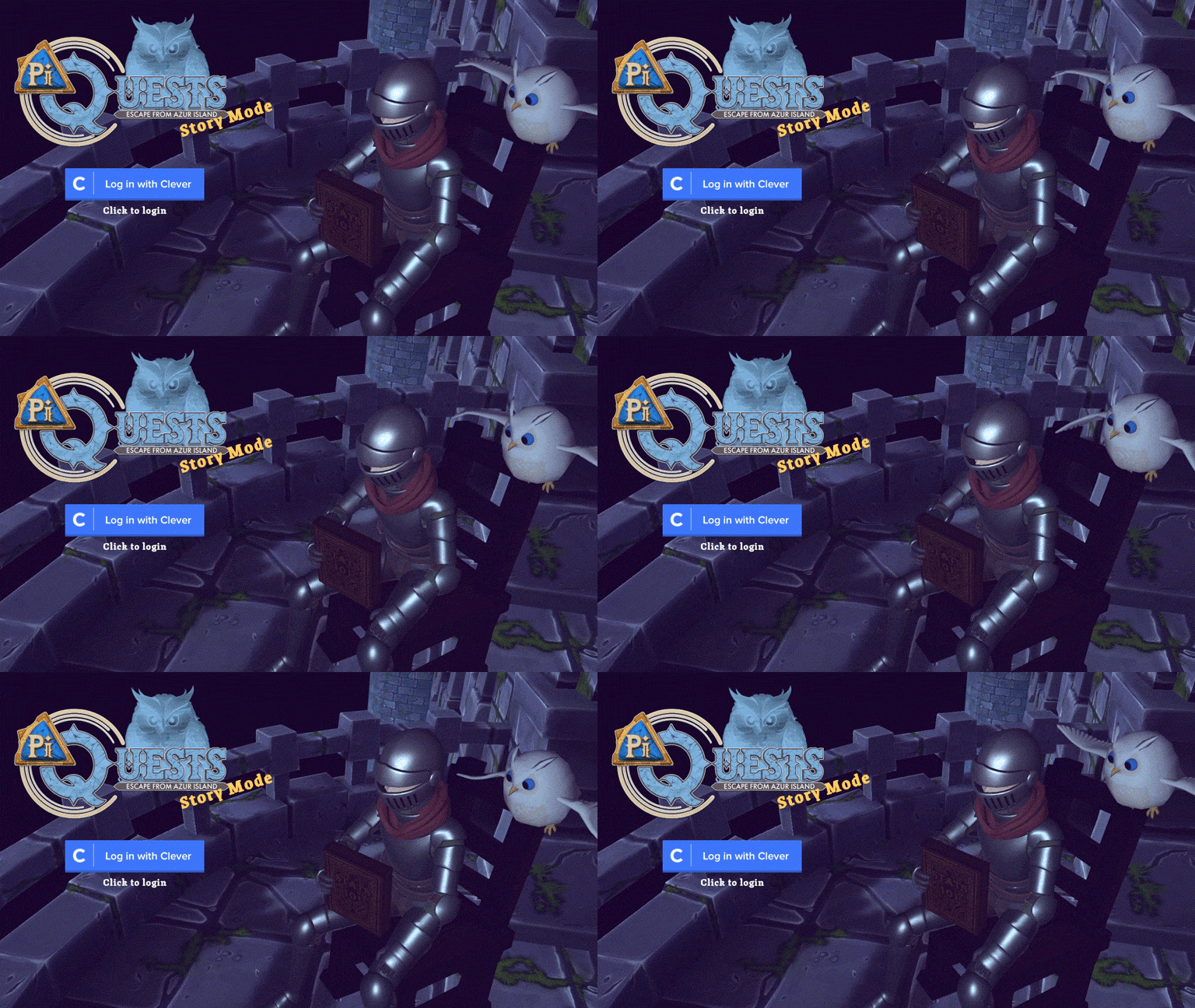
This role has also involved product, vendor, and business responsibilities beyond engineering. When Clever, one of our education-sector distribution partners, gave us guidance that would have forced PiQuest into an unnecessary WebGL-only build, I identified the inconsistency, briefed the team on the technical and liability considerations, and escalated directly to Clever’s engineering team until the requirement was corrected, preserving full feature parity with the Steam release. After a funding disruption forced a rethink of monetization, I proposed and helped implement a tiered offering built around how schools actually budget and procure software, and I’ve regularly served as technical lead in direct-to-school sales conversations. The company’s founder comes from an academic background – a statistics professor – so a recurring part of this role is translating engineering tradeoffs into decisions she can act on directly, including reviewing the technical claims behind the company’s federal SBIR grant proposals before they go out the door.
Infiblue World (2023)
Infiblue World, LLC
Mantis Bike Integration in Game Demo
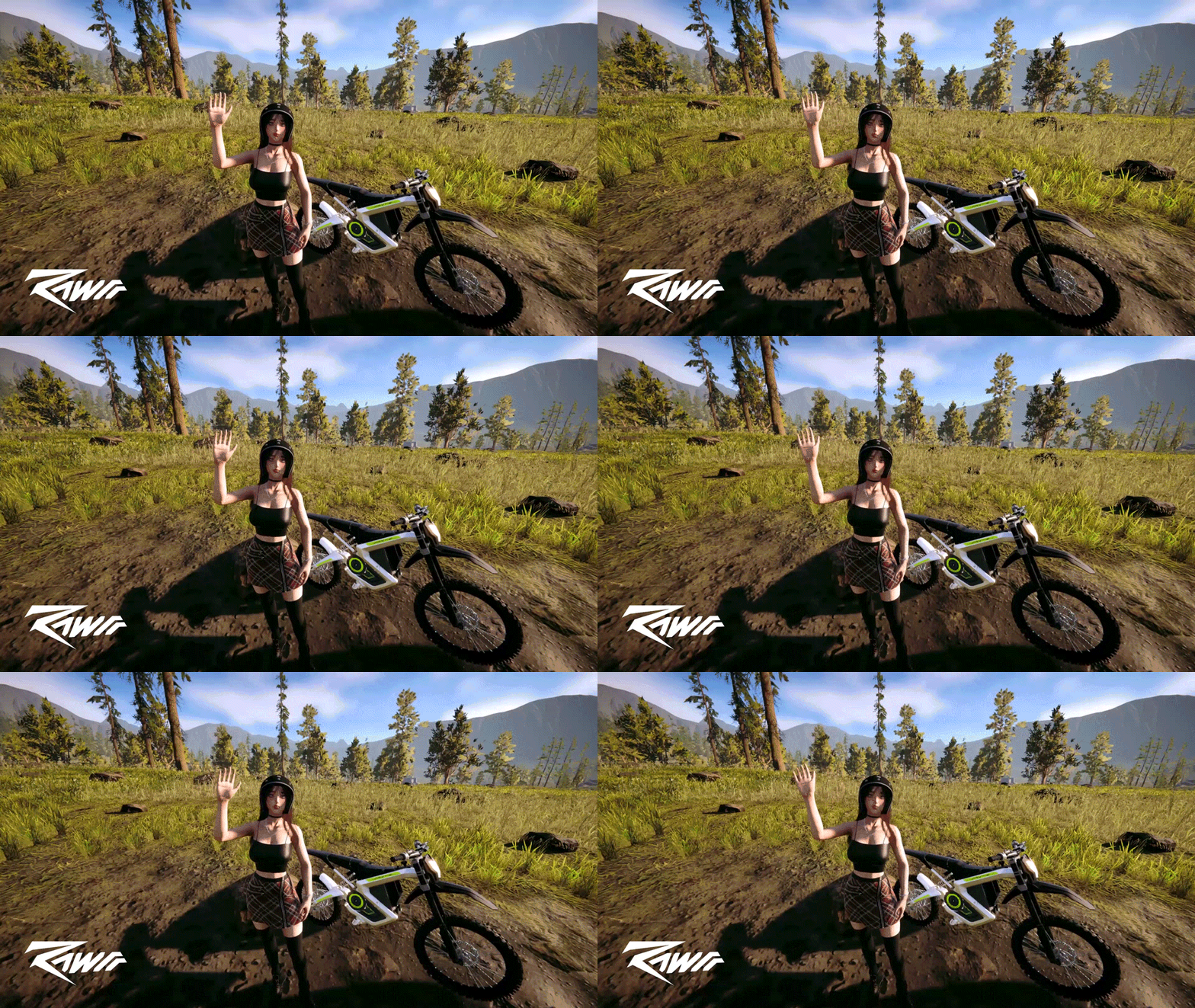
In this project, I created a game demo featuring our protagonist riding the Mantis, an electric all-terrain bike by Rawrr, Inc., showcasing partnership with Infiblue, LLC. This involved obtaining a 3D bike blueprint (CAD) directly from Rawrr, Inc.’s engineers and modifying it for Unity. Using Blender, I manually simplified, merged, and cleaned the meshes, and created custom game-ready textures for the bike. The integration was built directly from the manufacturer’s own engineering data, showcasing the seamless incorporation of a real-world hardware product into an interactive game environment.
Mapbox SDK Integration for Infiblue World
I integrated the Mapbox SDK into the Infiblue World game to procedurally generate a world based on real-world geography. The building and parcel datasets didn’t arrive linked to each other, so I built custom preprocessing tools to reconcile them before anything reached Unity, and implemented a roof-generation algorithm based on straight skeletons to fill in geometry the source data didn’t fully specify. The integration produced a dynamic, geographically accurate 3D map system built directly from external, real-world data sources.
Unity Framework for Gamer Flow State Research
Purdue University, Department of Computer Graphics Technology
Original Development (2019/2020): I built a Unity framework from scratch for official academic research on gamer flow state, in collaboration with researchers at MIT, Princeton, and Purdue. I integrated player-engagement analysis and data collection using AWS and PHP, since the framework existed specifically to produce data other researchers would draw conclusions from.
Refactoring (2023): Post-graduation, Purdue brought me back as an outside consultant to expand and update the project. I migrated the input handling to Unity’s newer input system, revised game logic to match updated research goals, and moved data handling onto ScriptableObjects and Addressables for better scalability. The framework became more robust and efficient, supporting ongoing research into player engagement.
Artist’s Eye: An Educational Game (2022)
InTrepEd, LLC
Engaged as an outside consultant to design and build “Artist’s Eye”, an interactive educational game aimed at developing observation skills in teenagers. I worked closely with educators throughout development, translating their teaching and assessment goals into the game’s mechanics and feedback systems. The final product was well-received and is still used as a teaching tool in educational settings today.
For inquiries or to discuss potential projects, reach out at mangk0rn@tryhardteam.com.